Tuesday, February 25, 2020

The Darwin Research Center in Puerto Ayora

Our last excursion was also with Pati.  This time we traveled south along the coast to the main town in Santa Cruz.  They are doing amazing work trying to repopulate the various islands.  Each island has the same basic story, rats have been introduced to the ecosystem, voluntarily or involuntarily.  These rats can eat the eggs of the tortoise or actually eat through the shells of the young tortoises killing them in the process.  The adults are hardy enough to survive anything the rats can throw at them so the trick is getting the babies old enough to release them back on the island that they evolved on.  Each stage of hatch-lings are separated based on their specific development stage.  When a female laid eggs she dug a deep hole up to 3 feet deep, laid her eggs and then urinated on the refilled hole.  The urine would help compact the dirt so that nothing could dig up the eggs and have a snack.  As a result the hatch-lings may have taken up to a month to dig themselves out.  So when they hatch at the research center they are kept in pretty close quarters with limited area to move around.  They are kept in rat proof cages for the first two years to protect them.  After a month or so they are transferred to cages where they can start to move about the terrain and build up strength.  Different species are intermingled but each is numbered and they are different enough that each species can be identified.  They have Lonesome George stuffed and on display.  He was the last of his species but alas was never able to breed.

These wooden signs are incredible


That says it all


Intrepid Explorer


Great signs


The youngest tortoises are just about 3 to 5 inches in diameter


Keeping track of the youngest


The second level of maturity


Keeping track of all of the tortoises


The water is there sometimes and not there at other times like it will be when they are released


Almost ready to be released


#24 is in the lead


A tall shell allows the tortoise to reach higher to get food


The top of the shell is called the saddle


And a long neck to reach more grub


Some species are larger than others


Much less of a saddle, this island may have plentiful food lower down


Super long neck


Lonesome George


Intact Lava Tubes and Tortoises

After the collapsed lava tubes we went to see intact lava tubes.  There were stair ways into the tubes and then we walked through them to the other side and then up the stairs to get out.  In the surrounding fields are several tortoises.  Some in the grass, some in the ponds but none of them moving swiftly.

Grazing Tortoise

Tortoise Two

the entrance to the lava tube


Down down it goes


Patti in the distance


The tube had allot of structure along the sides


There were ripples in the rock where the lava flowed


A two level lava flow, not sure if it is two different flows or one flow with a harder center area from a former flow


Lots of structure in the lava tube


This tube is very long


A plant grows anywhere there is light


Lunch time for the reptiles


Quite tasty indeed


Close up time


Most leathery


Males tails turn to the side to protect the jewels


An introduced species the Ani


The SS tortoise has sailed


I really like the reflection in the water to complete the circle


Huge fore limbs


A shell that is empty


Inside the shell


The backbone is fused to the shell


Bone Yard


Different shells for different species

Monday, February 24, 2020

A stroll through the highlands

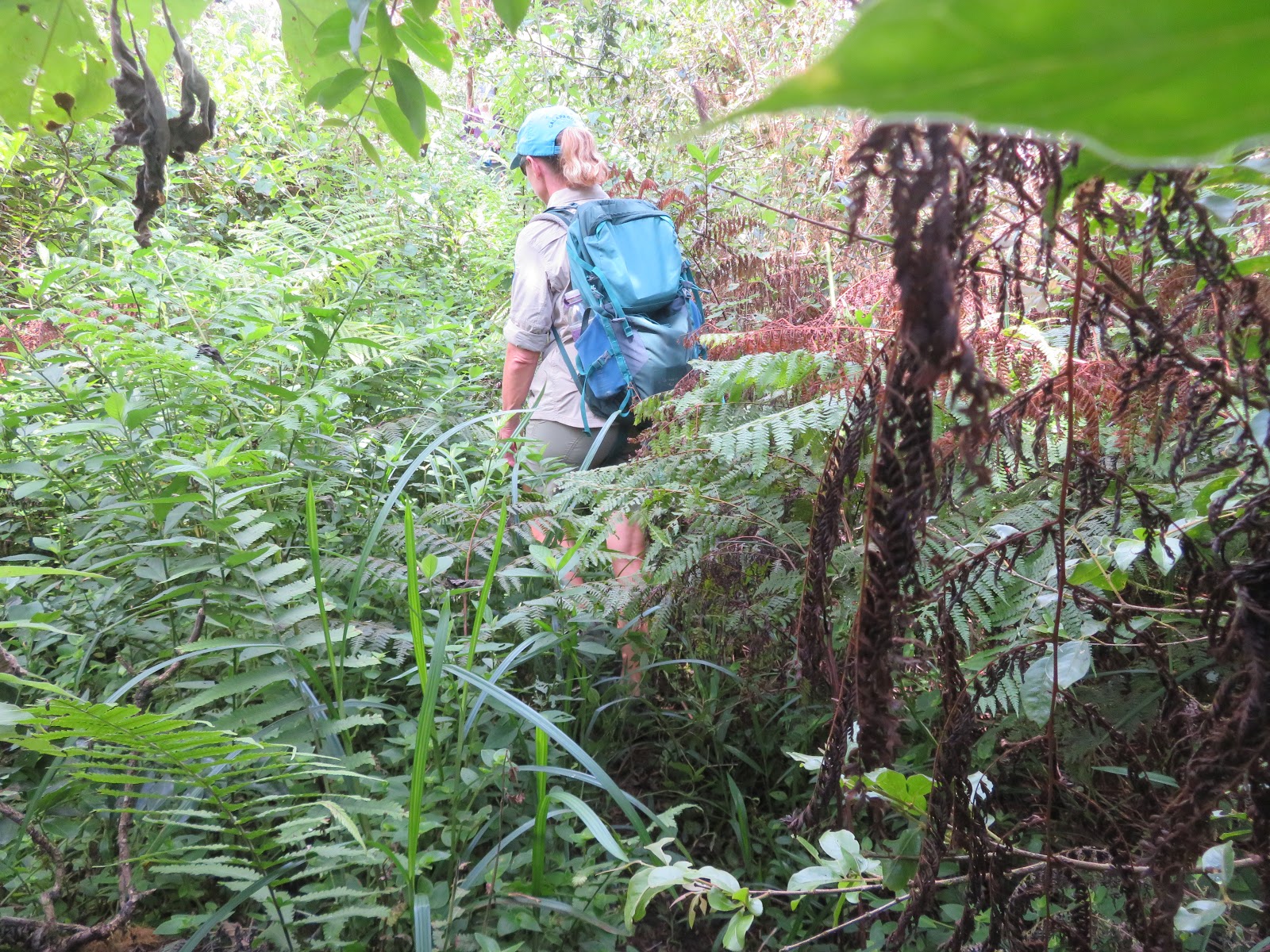
Today is a land excursion to the highlands.  Our guide is Patti Stuki who has been a guide here for 24 years.  She is a wealth of knowledge about the birds, plants and animals.  The first stop is a series of collapsed lava tubes.  I am only estimating the size but they are 100 feet deep and 200 feet by 300 feet wide.   We walked around the edges of the two large holes.  We saw other folks along the way as the trail got more and more overgrown.  We kept seeing birds and bees and Parti knew each song and each animal.  Eventually the trail was so overgrown that he decided to call it a day at this site.

looking out over the collapsed lava tube


Tall long and wide!


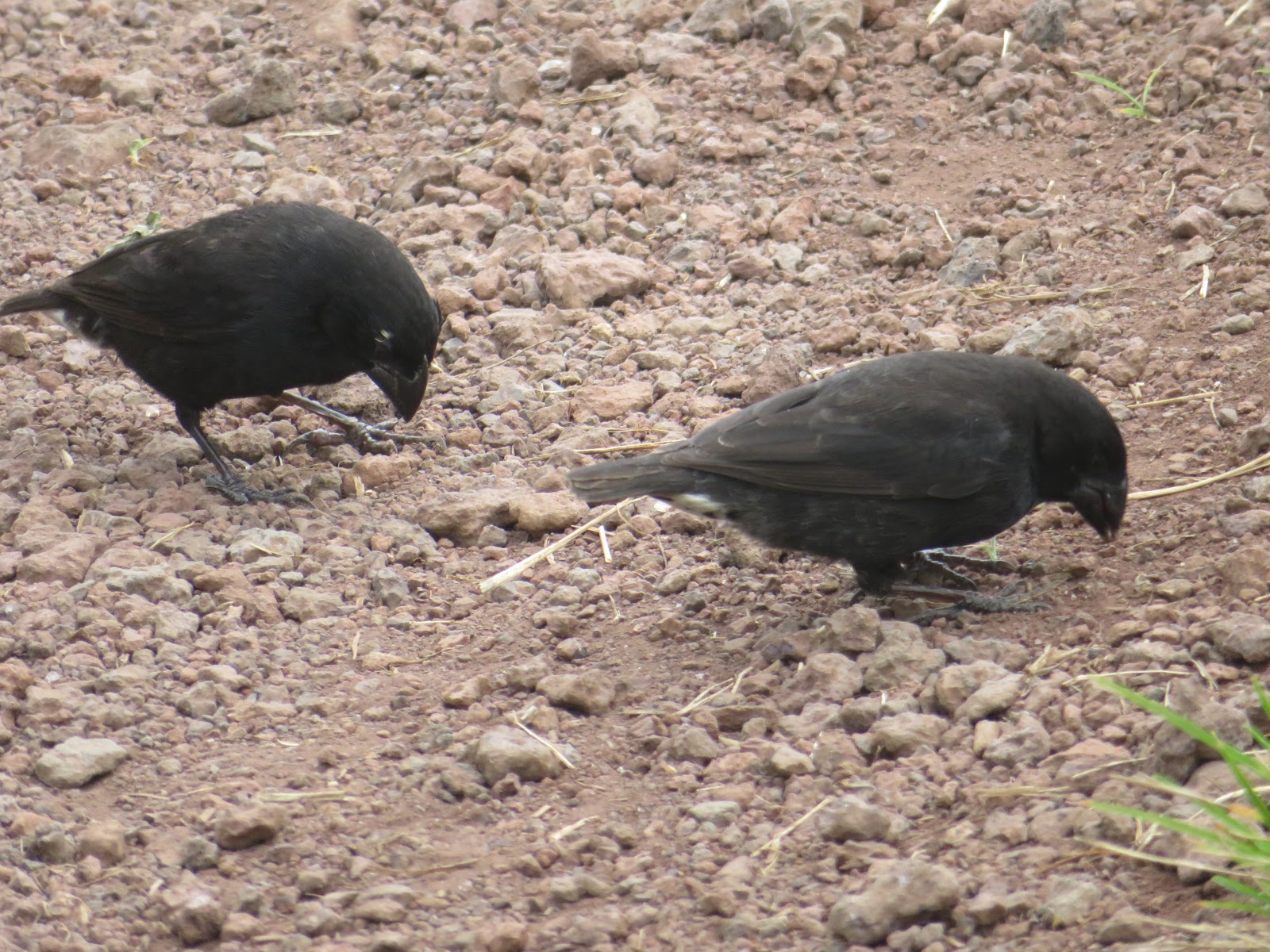
Ground Finches


The wet season has only reached half of this hill


100 foot drop into the hole


A beautiful wooden sign illustrating the holes


The wet season has arrived here


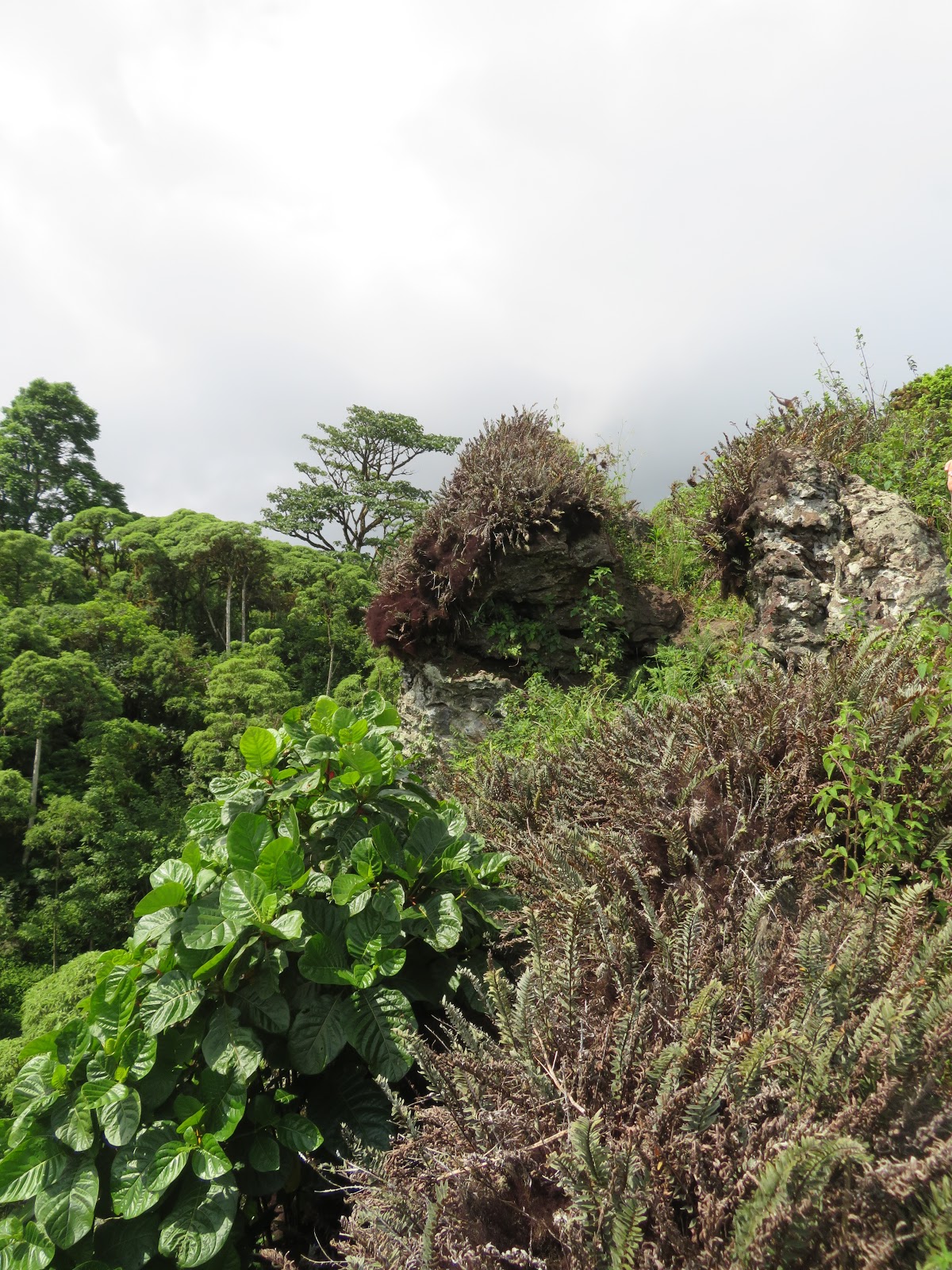
It looks looks karst geography from limestone instead of the lava that it actually is


Another fine sign


A native orchid, not in bloom.


This finch had a bug


Yummy, full belly


The second hole


Giant tree fern


Old mans beard hanging off of this tree


Patti following the "trail"


a wide range of vegitation


Tree fern central


Finch or mocking bird


Can you find Patti?  


Taller trees


Another finch another meal


  So long to this trail!